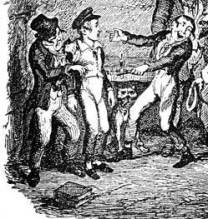
‘Them two boys have been shut up in the cell’
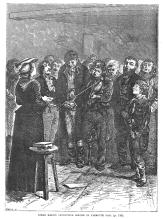
Wednesday 8 January 1840 Today, as soon as Sarah Martin appears at the door of the dayroom in the House of Correction, Walter Tunmore flies forward to take his teacher’s paper case. ‘Them two boys’, he blurts out, ‘have been shut up in the cell for behaving ill – for singing.’ Indignant at Walter’s snitching, […]
Read More »
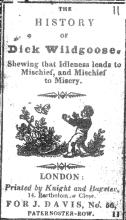
‘Oh, what beautiful books!’
Tuesday 7 January 1840 Yesterday the boys in the House of Correction were restless and quarrelsome. Today, when Sarah Martin arrives to teach them, she asks ‘are you all prepared for me?’ ‘Yes, yes’ they cry. The prison visitor shows them ‘a handful of little books’ she has brought with her, ‘such as “Short Stories,” […]
Read More »
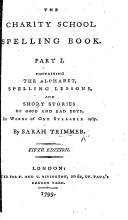
‘Not Forced to Learn’
Monday 6 January 1840 ‘The young Boys have been very Idle’ the prison visitor Sarah Martin writes today in her Everyday Book. As wardsman, the inmate John Bevington is supposed to supervise the boys in the House of Correction and report any bad behaviour. Walter Tunmore, he tells Miss Martin, ‘does not like his book […]
Read More »

Trouble in the Family
Sunday 5 January 1840 On Friday, Sarah Martin wrote of a sixteen-year-old factory girl imprisoned for stealing clothes from three women: ‘Martha Tan is improving in working and reading. Her manners are improved.’ Today she observes in her Everyday Book: ‘Martha Tan was in the cell for being overheard when using bad language.’ The girl […]
Read More »

Neglected Boys?
Thursday 2 January 1840 We do not know if prisoners at Yarmouth Gaol welcomed in the New Year 1840 for the Gaoler made no note of any celebrations or disturbances. The wheels of justice, however, continued to turn. On New Year’s Day Joseph Burton, sailor, was admitted to the debtors ward, owing £1.1.3 debt and […]
Read More »

Fighting and Swearing
Monday 30 January 1839 The three boys, sent down for 30 days hard labour 28 January 1839, are quick to make their presence felt in Yarmouth Gaol. Today, the Governor locks them in the solitary cells for 12 hours for ‘for fighting and making use of obscene language’. The boys must have been fighting with […]
Read More »
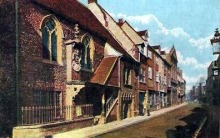
Inside an early Victorian Prison
Sunday 29 December 1839 Last night Robert Harrod (15), William Hickling (14) and Walter Tunmore (12) spent the first night of their 30 day sentence in the House of Correction. Today they will spend much of the morning in the prison chapel, listening to Sarah Martin deliver one of her interminable sermons and, in the […]
Read More »

Serving Time at Yarmouth Gaol
28 December 1839 On Saturday 28 December 1839 three boys were committed to serve 30 days Hard Labour at the House of Correction, Great Yarmouth.[i] On 2 January 1840 they were joined by two more boys, also sentenced to 30 days. Over the next month I will blog each day about the boys’ experience inside […]
Read More »
Christmas in Prison, 1839
On Christmas Day 1839 inmates at Yarmouth Gaol tucked into a hearty meal of roast beef and plum pudding paid for by the Mayor. I hope it was washed down with ale, as it had been in 1837. The festive dinner must have made a welcome change from the monotonous prison diet of bread and […]
Read More »

Tattooing in Gaol
In 1845 the bricklayer, James Thirkettle, was sent to the solitary cell for a day for making marks on the back of his hand by pricking with a needle and ink. The Gaoler recorded only three occasions when he discovered prisoners pricking themselves in the nine years 1836-45 but tattooing was one of the illicit […]
Read More »

 Conviction